A lifestyle goods label
A house for everyday objects, with clear collection names and useful retail detail.
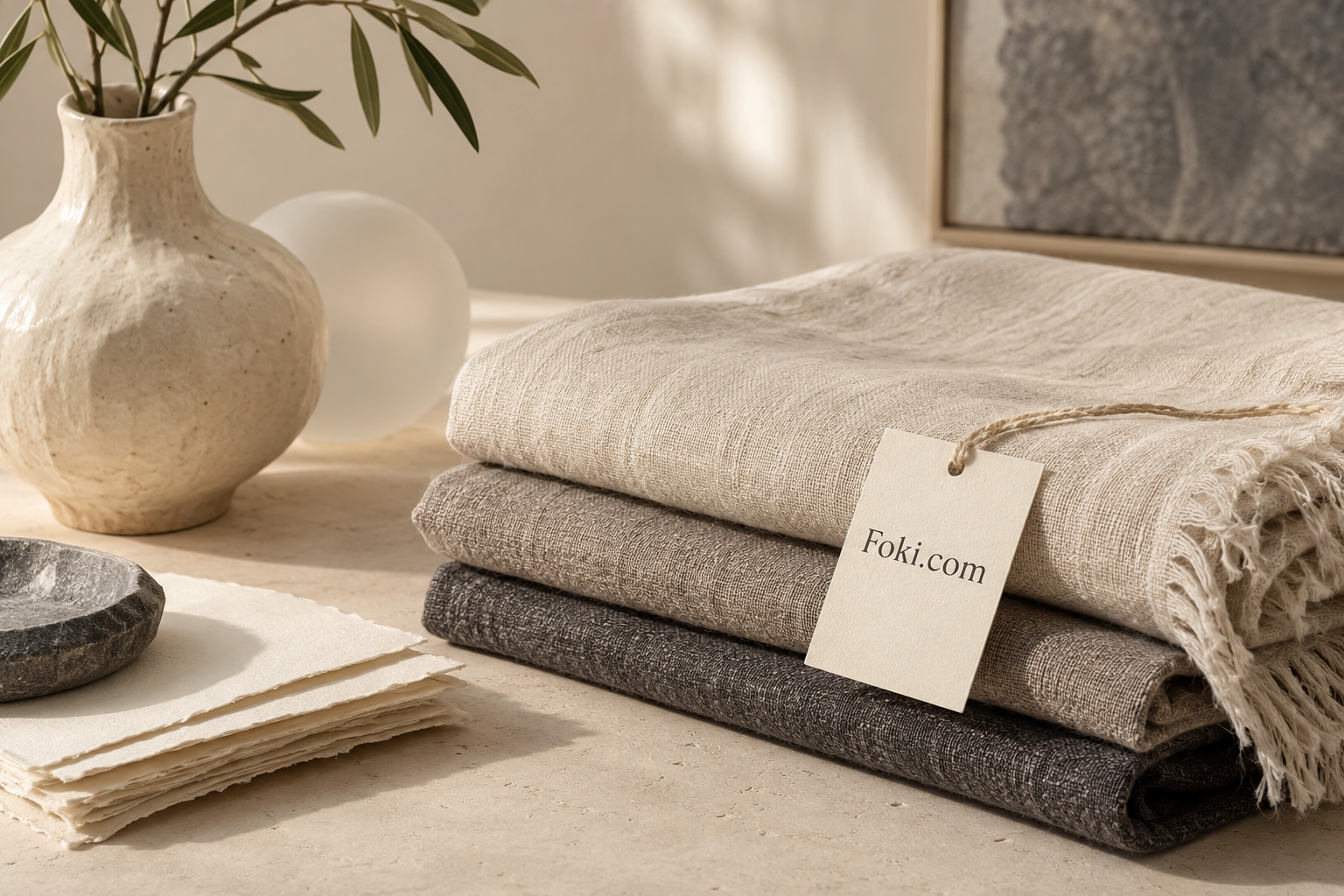
A house built around everyday use
Foki.com could suit a small label for linen goods, desk objects, or other things people use often. Imagine a first collection organized around a familiar part of the day: setting a table, carrying a few essentials, or making a workspace comfortable. This is an illustrative retail concept, not an existing range or a claim of customer demand.
Begin with a buyer and a use occasion. Someone choosing a practical gift needs different information from a person replacing a worn everyday item. The first might care about presentation and delivery timing; the second may focus on dimensions, material, and care. A calm identity can hold both conversations eventually. The launch should make one of them especially easy.
Make the first collection small enough to understand
A first drop could contain a linen cloth, a pair of napkins, and a simple storage pouch. That is a hypothetical assortment, not a recommendation to place an order. The useful exercise is to explain why those items belong together. Shared material alone may be too weak; a shared occasion can make the selection more coherent.
Write a one-line job for each object. The pouch keeps a few small items together; the cloth covers a compact table; the napkins complete a setting without requiring a large set. If an item has no clear role, remove it from the draft collection. A limited range is easier to photograph, explain, and check for consistency than a catalog assembled to look established.
Let the product names do the sorting
The house mark can remain Foki while product titles stay descriptive. “Linen table cloth” tells a shopper more than an unexplained poetic name. Color, size, and collection can follow in a consistent order. A restrained naming system also makes customer service easier: the buyer and the person answering the message can identify the same item.
Sketch a catalog with three layers: house, collection, and item. Give each layer a reason to exist. If the first collection has only a few products, it may not need a name of its own yet. A seasonal label should help people browse or reorder; it should not hide the information needed to buy the correct version.
Show the object at a useful scale
Soft photography can establish a mood, but a retail page needs evidence about the object. Plan a full view, a close detail, and an image that communicates scale. For a textile, a folded photograph alone may leave the buyer guessing about size. Pair the visual impression with written measurements and material information that the eventual supplier has confirmed.
Imagine a customer opening the parcel. Does the item resemble the color on the page? Are care instructions easy to find? Is the packaging appropriate for the intended use? These questions belong in a launch review before a large campaign. They are also a reminder that a brand is encountered through physical details, not only through a tidy web address.
Write retail copy that helps a decision
A useful product description begins with the object and the situation it suits. Explain how it feels only when you can describe an actual sample. Replace vague quality claims with the construction details the maker can substantiate. If an item needs special care, put that information where someone can see it before purchase.
Keep the collection introduction short enough that products remain easy to find. The About page can carry a longer account of the eventual label's purpose and people. Avoid borrowing a manufacturing history or a sustainability story before those facts exist. A new house can speak plainly about its first range without pretending to have generations of workshop tradition behind it.
Test a distribution path that matches the range
For a small launch, consider a focused editorial email that introduces the collection through its use. A table setting story can show several objects together without making every paragraph an offer. Build the list with clear permission and a specific reason to subscribe, such as news of the first collection. A large audience with no interest in the objects is a poor substitute for a relevant one.
A retail conversation is another possible route. Prepare a concise line sheet with confirmed details, images, and an explanation of the assortment. Do not imply stockists or wholesale partnerships before agreements exist. The point of an early conversation is to learn whether the range is legible to someone who has to explain it to another customer.
Check the economics behind the presentation
Before a first drop, map the costs that continue after the product leaves the maker: packaging, shipping, damaged goods, returns, storage, and customer questions. A visually simple product can still be expensive to fulfill. Use actual quotes and sample results when deciding the order size; a polished identity is not evidence that inventory will sell.
Give replenishment some thought too. If the first material becomes unavailable, can the range continue honestly under the same description? Decide how revised versions will be named and photographed. Consistency should help customers recognize what they bought, while making changes visible enough that repeat buyers are not surprised.
Bring a first-drop brief to the conversation
Try Foki.com on a care card, an order confirmation, and a simple product label. Check that the name and address remain readable at the sizes the actual packaging allows. Test the spoken name with the people who will encounter it in your intended market, rather than assuming every audience hears it the same way.
An inquiry can begin with the category, the buyer, and the first collection you have in mind. Mention whether the domain would introduce a new label or replace a weaker address for an existing one. That distinction helps frame the next steps, including which existing materials might need to change and what the buyer expects to acquire.